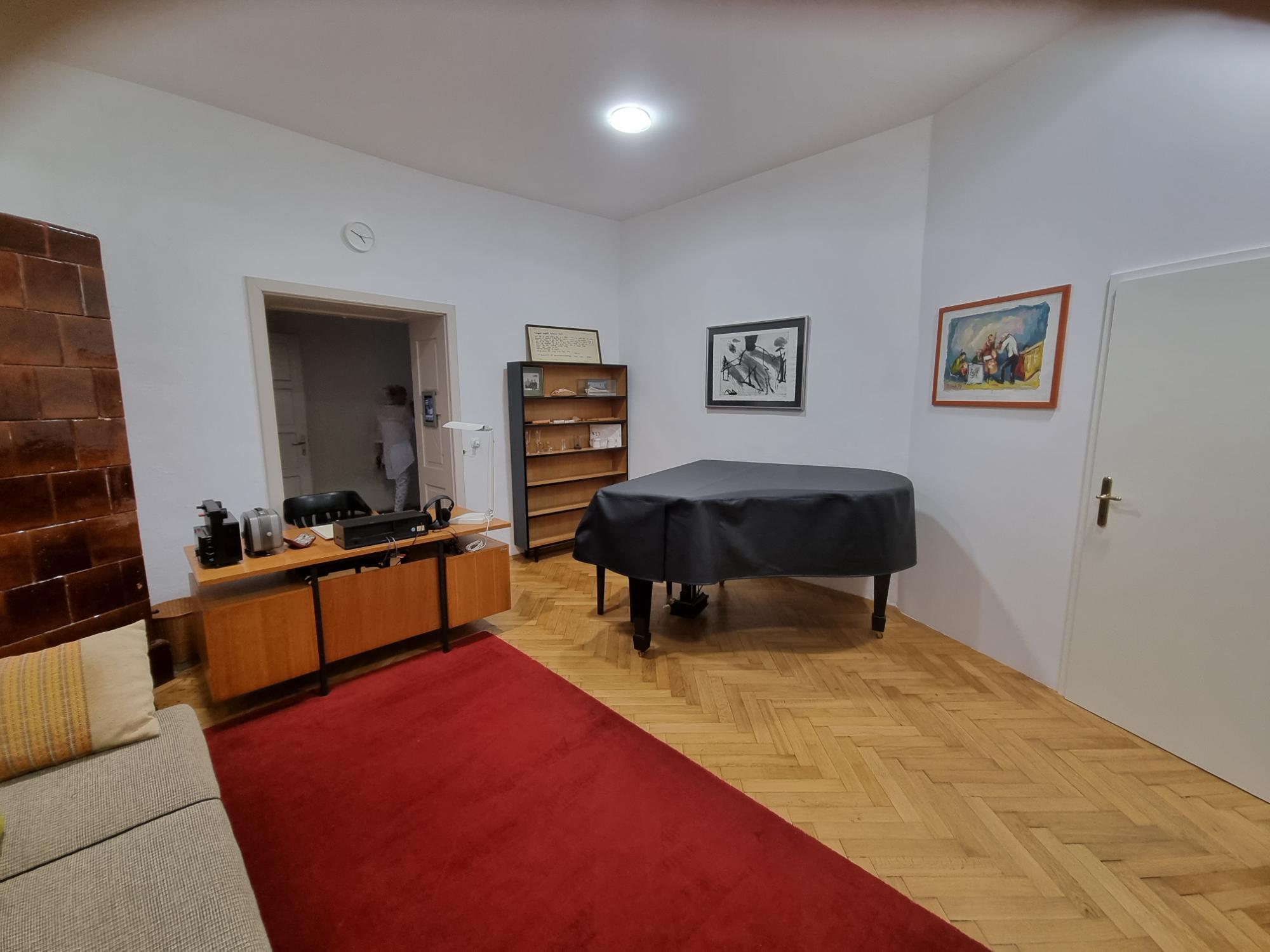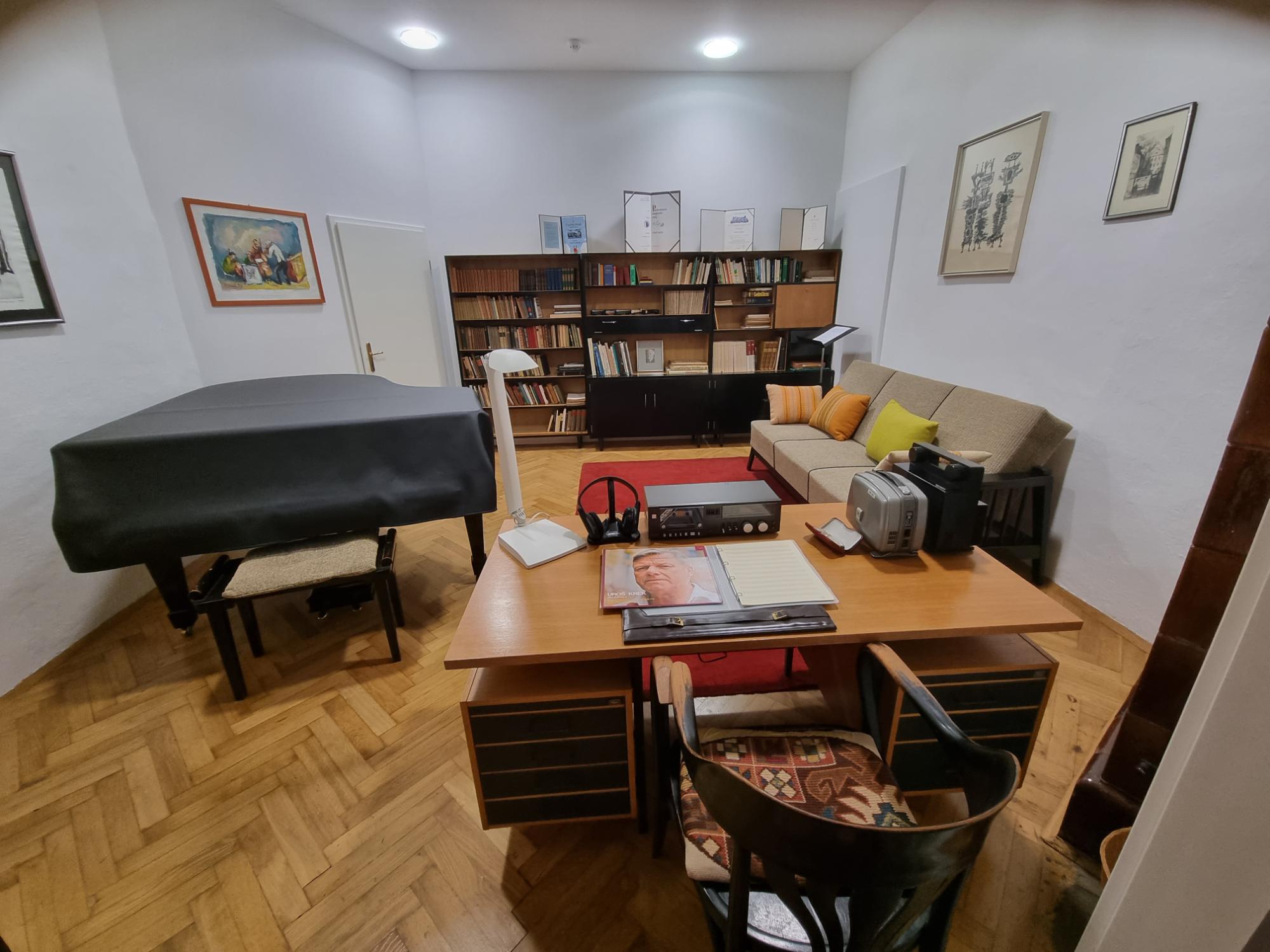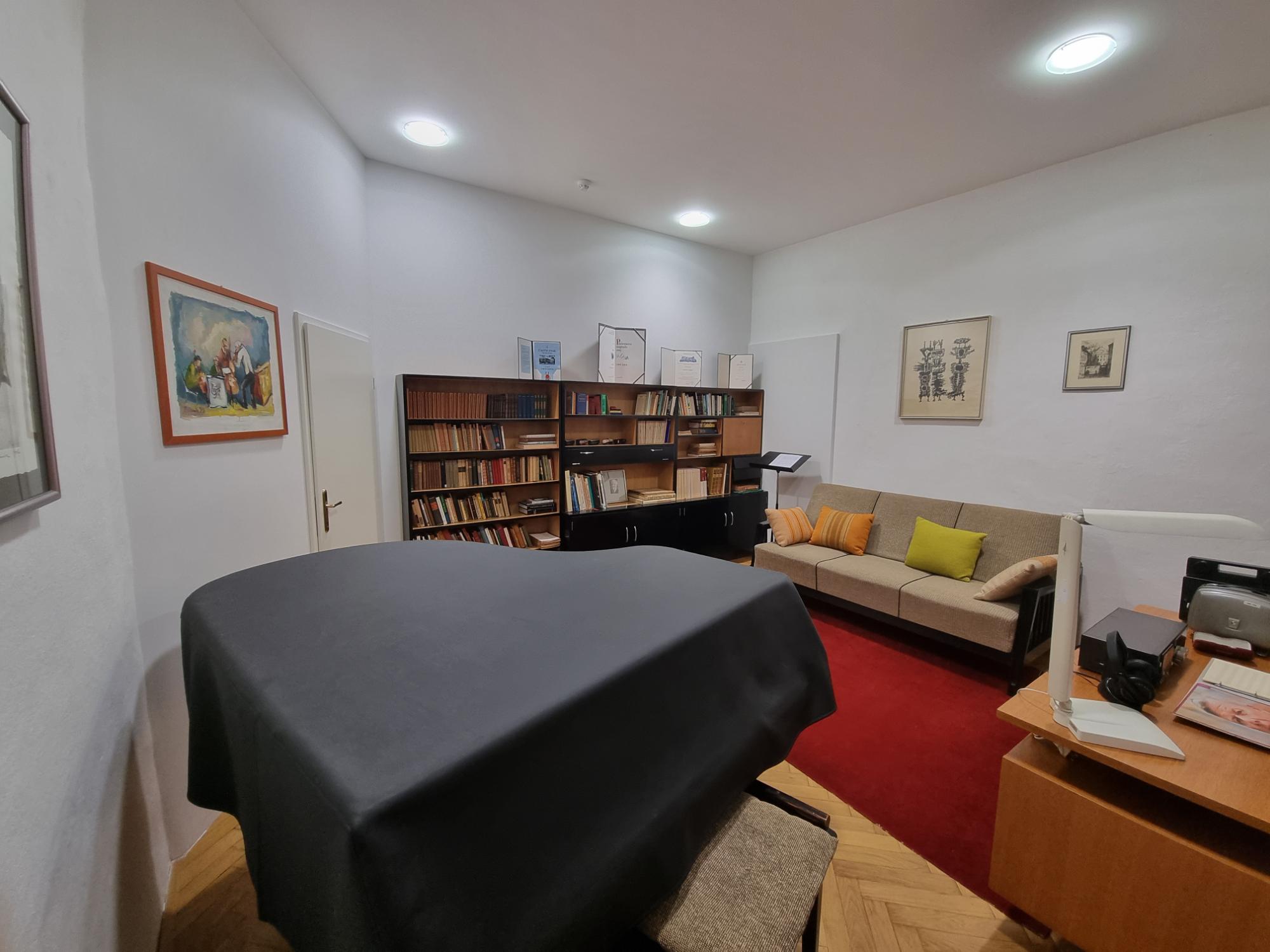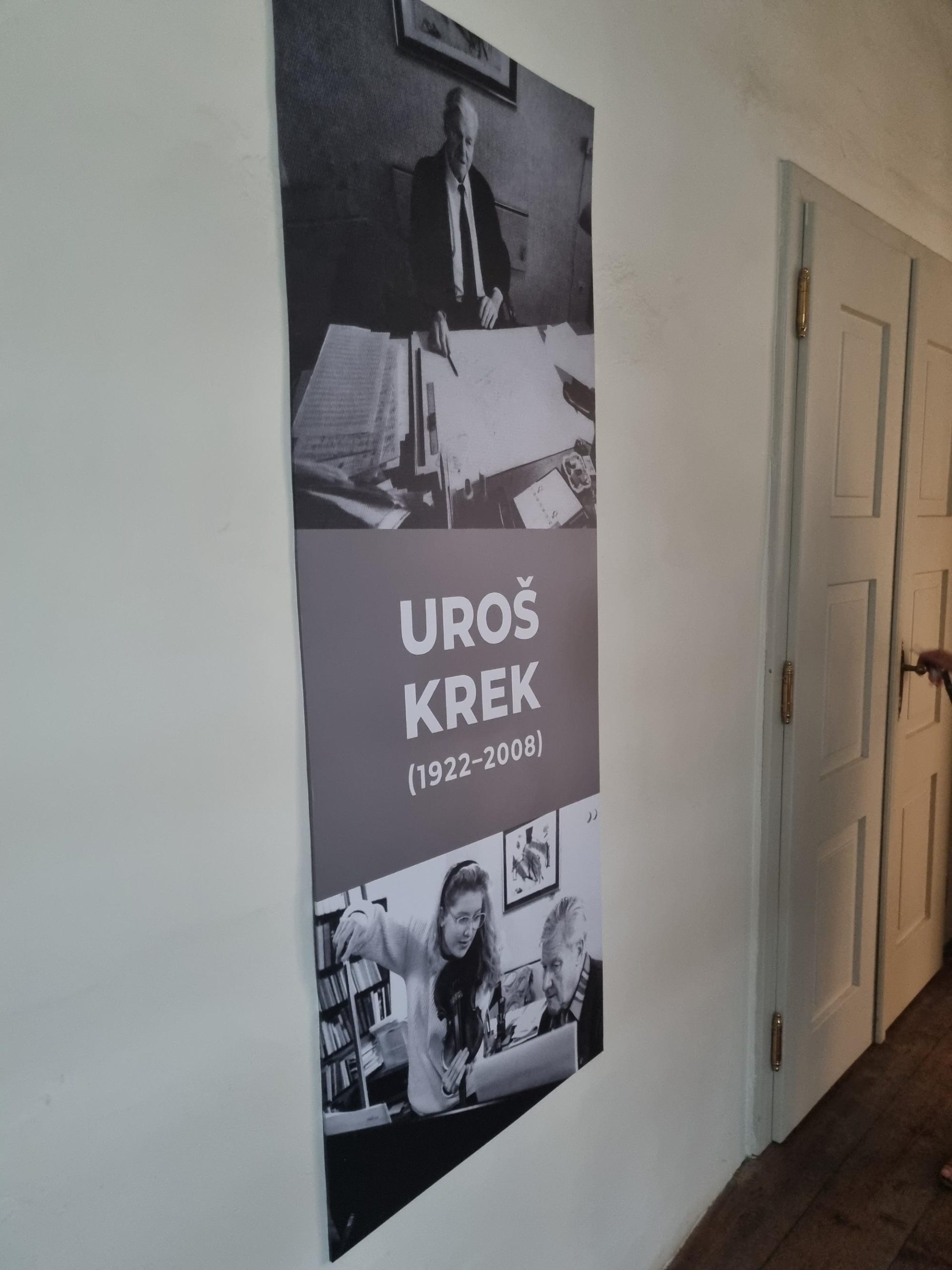
The Museums of the Municipality of Radovljica have converted one of the smaller rooms on the second floor of Radovljica Mansion into a memorial room dedicated to the composer Uroš Krek (1922–2008). It was opened on the opening day of the Festival Radovljica, on 5 August 2022, marking the centenary of the composer’s birth.
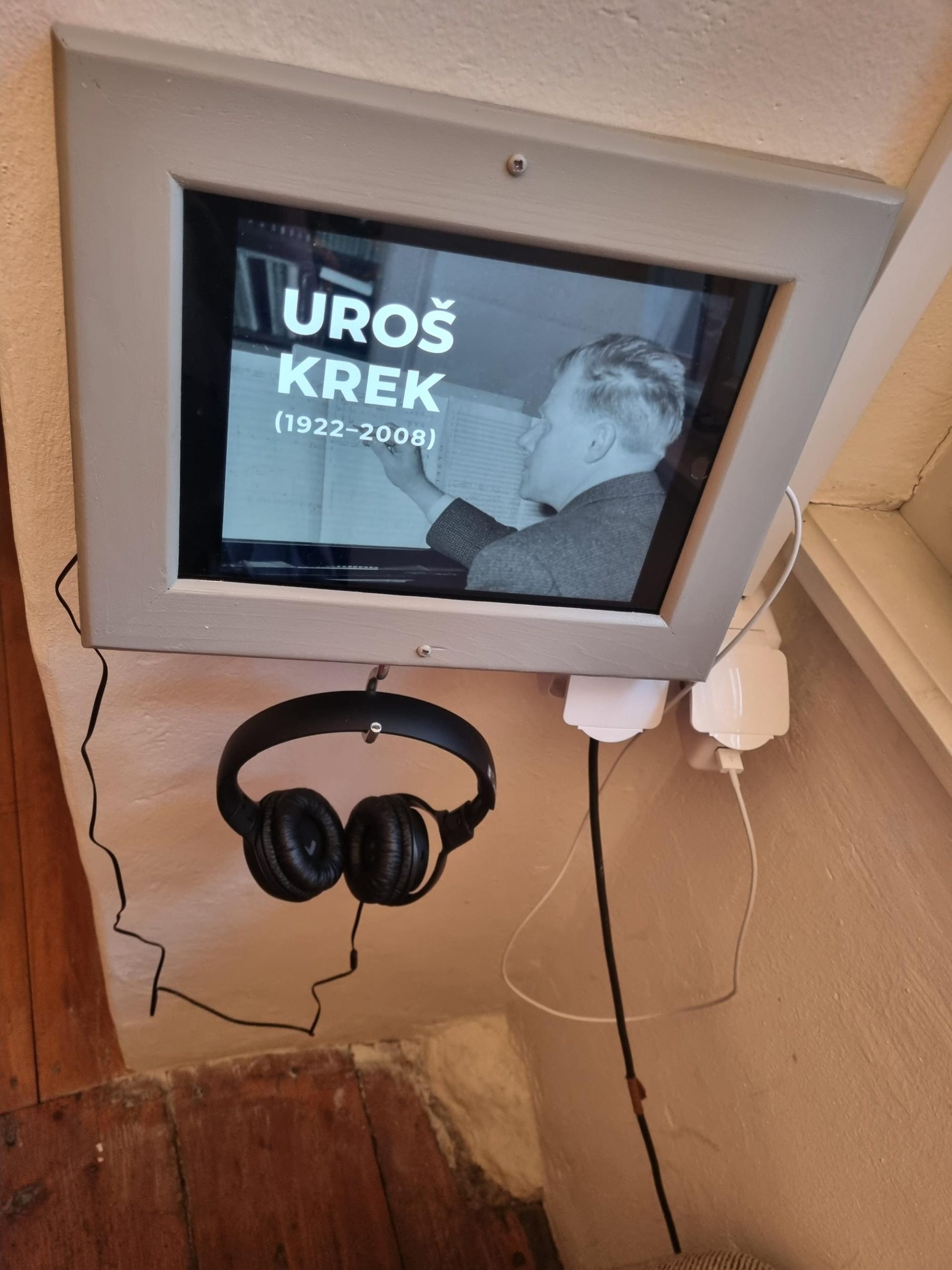
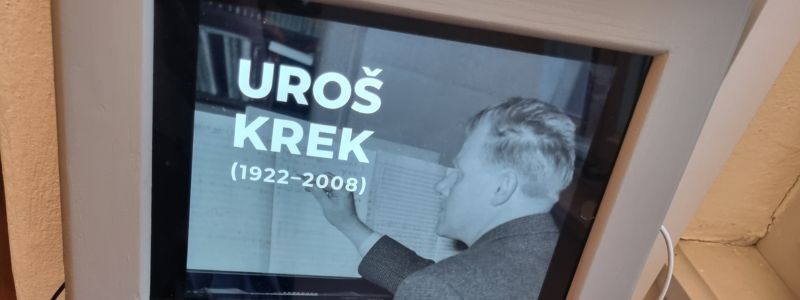
The room is a faithful reconstruction of the master’s creative refuge in his home in Lesce. It has been furnished with equipment and personal items from his study in Lesce, donated to the museum by the composer’s heir. Krek’s music, which visitors can listen to on a tablet, has been made available to the museum by RTV Slovenija.
Uroš Krek
Uroš Krek (1922–2008) stands among those Slovenian composers in whom personal ethics, aesthetic stance, and social responsibility converge into an exceptionally coherent artistic whole. After studying composition at the Academy of Music in Ljubljana with Lucijan Marija Škerjanc, he began his career at a time when Slovenian music, in the aftermath of the Second World War, was redefining its place within the European context. He never yielded to fashionable avant-garde trends or to the ideological pressures of the period; instead, he developed a highly individual voice grounded in clear formal thinking, measured modernity, and a profound respect for musical continuity. His long association with Radio Slovenia gave him an unusually broad listening horizon, an analytical understanding of diverse aesthetics, and close contact with performers—qualities reflected in the exceptional practicality, transparency, and musical logic of his works. As a professor at the Academy of Music, he did not cultivate followers but independent creative minds, consistently insisting that every composition must be internally justified, honest toward its material, and responsible toward the listener. A central aspect of his artistic development was his deep engagement with Slovenian folk music, which he knew firsthand and understood as a living, open structure rather than a museum artifact; folk impulses in his music are not quotations but transformed carriers of rhythm, modality, and dramaturgical tension. His musical language is often restrained, almost ascetic, yet never cold—its emotional dimension unfolds gradually through finely balanced proportions, precisely shaped motives, and a keen sense of long-range form. Krek’s oeuvre, encompassing orchestral, concertante, chamber, choral, and film music, is marked by remarkable stylistic coherence and an uncommon degree of self-discipline, ensuring that none of his works feels superfluous or superficial. While major national awards, membership in the Slovenian Academy of Sciences and Arts and in international academies, and the enduring presence of his music in concert life confirm his central position in Slovenian art music, his true legacy lies above all in his example: the conviction that contemporaneity can be built without abandoning tradition, that modernity may be quiet, thoughtful, and ethically grounded, and that music needs no external noise to be profoundly of its time.