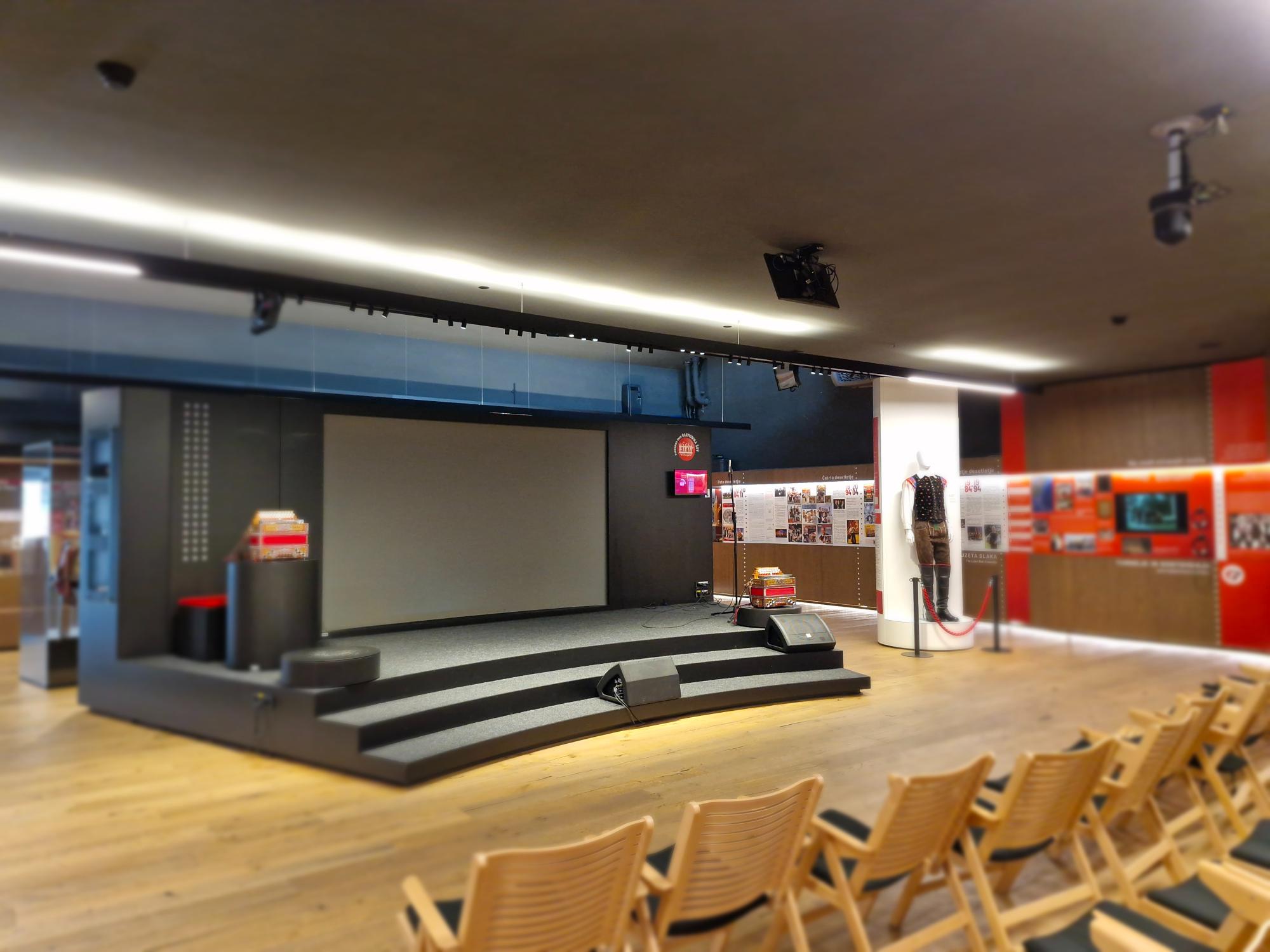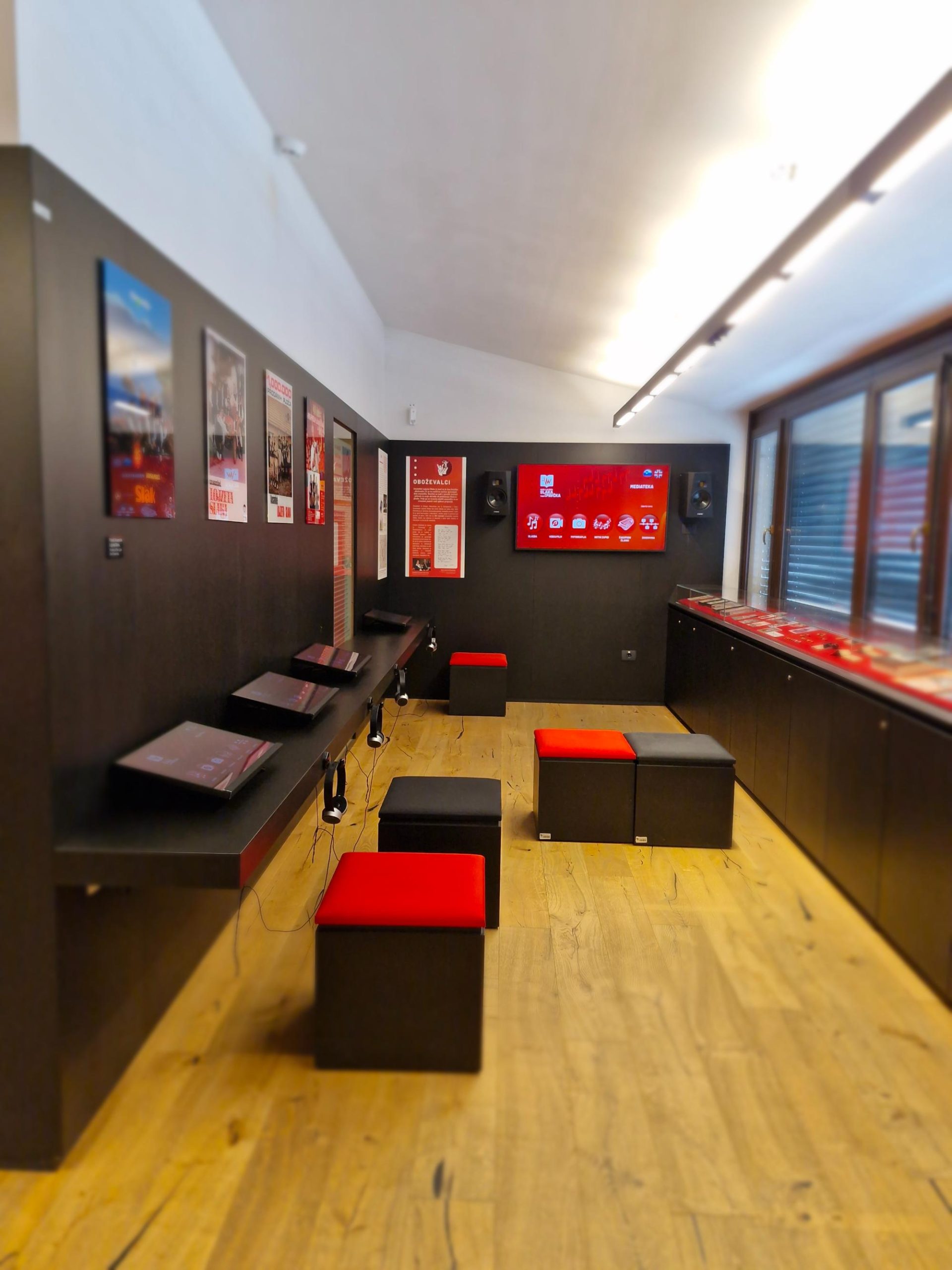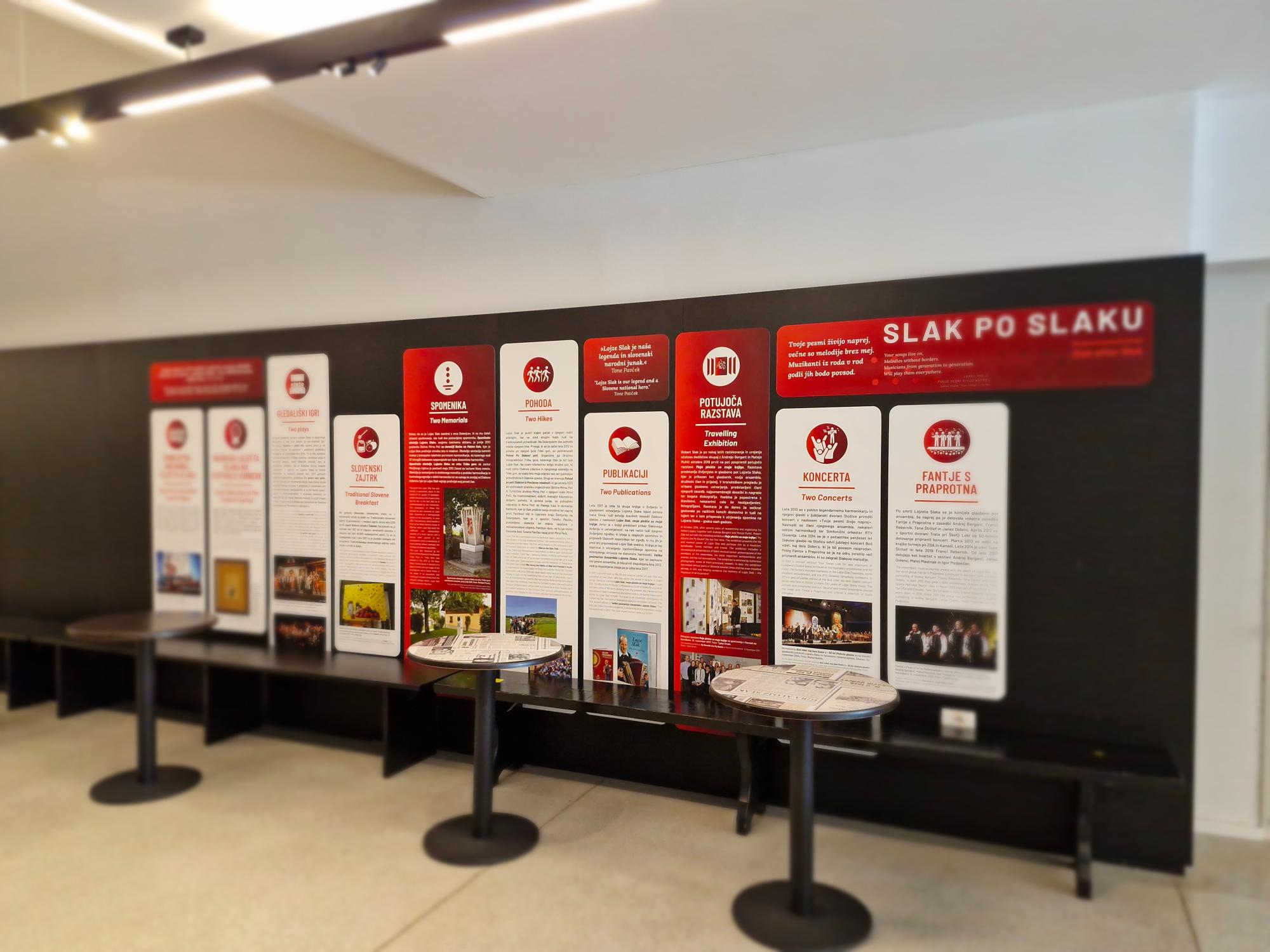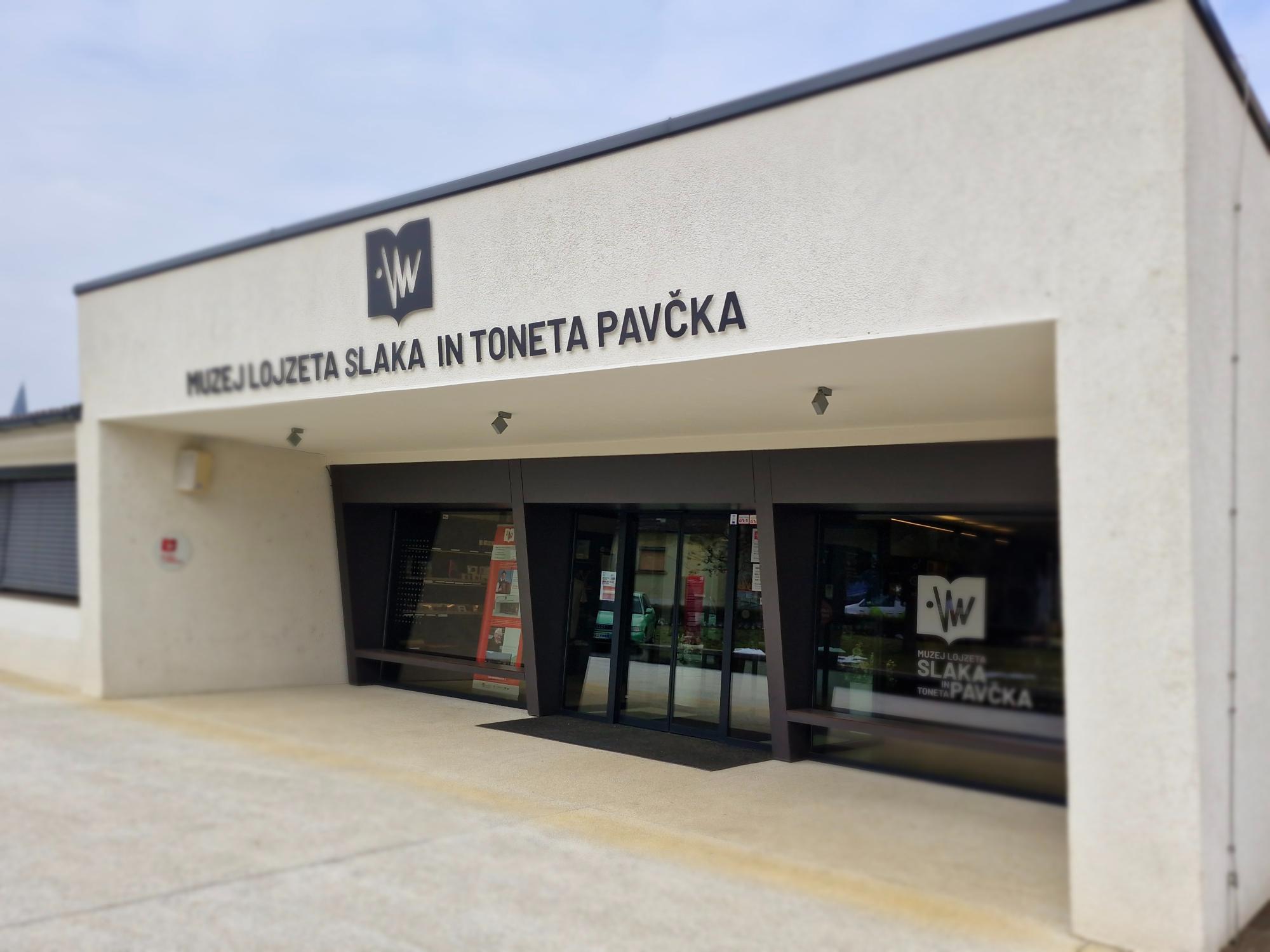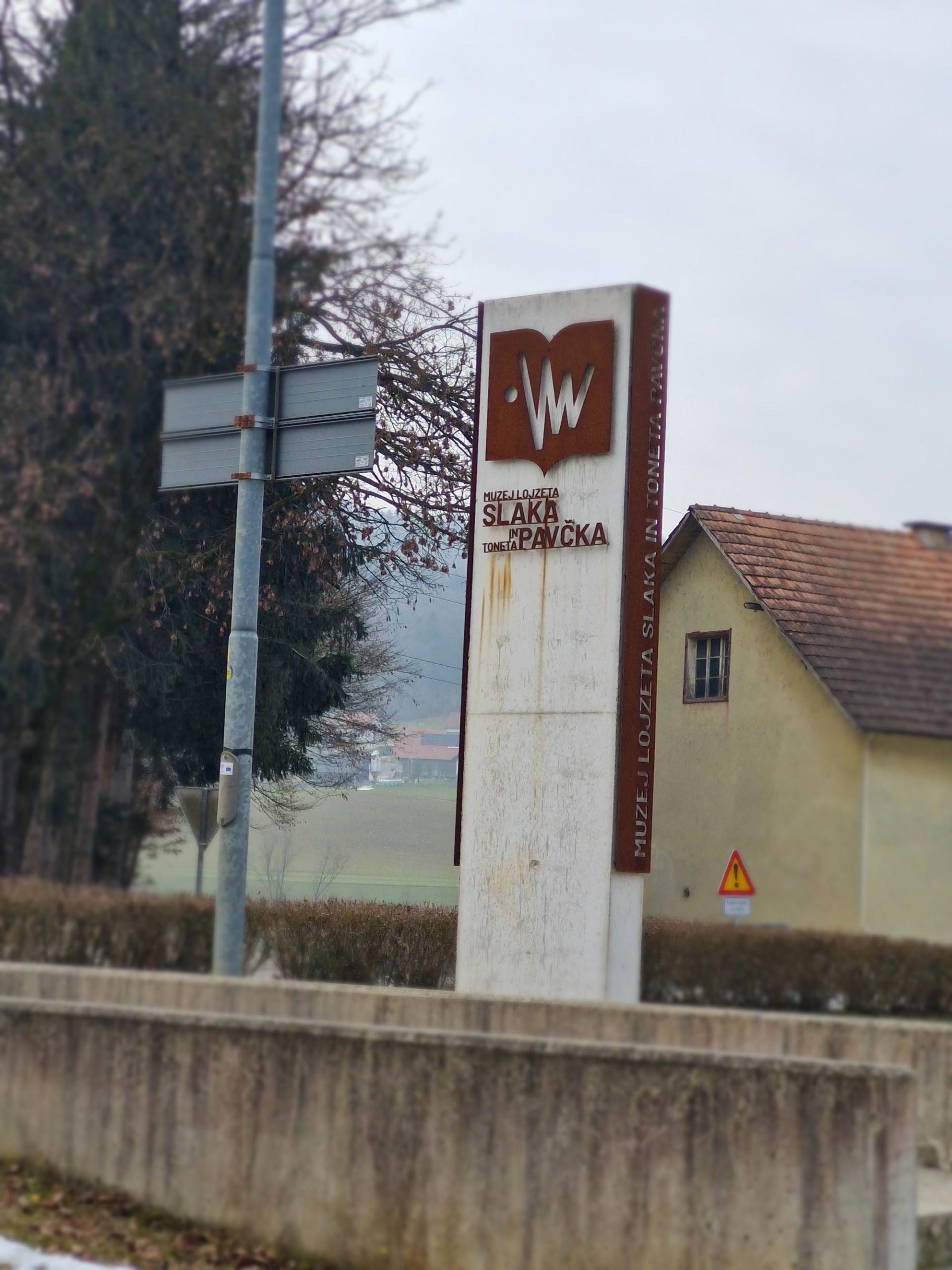
The Lojze Slak and Tone Pavček Museum is housed in a renovated section of the former primary school in the centre of Mirna Peč. The first phase of the renovation was dedicated to presenting the life and work of the musician Lojze Slak. The museum opened in October 2018 and comprises 350 square metres of exhibition space.
As part of the renovation, a new entrance was created, the exterior of the building refurbished, and interior furnishings installed to allow for a contemporary presentation of the artists. The museum includes a multifunctional hall with a stage, a memorial room, a media library, a small shop selling souvenirs and CDs, an entrance area, and a reception desk.
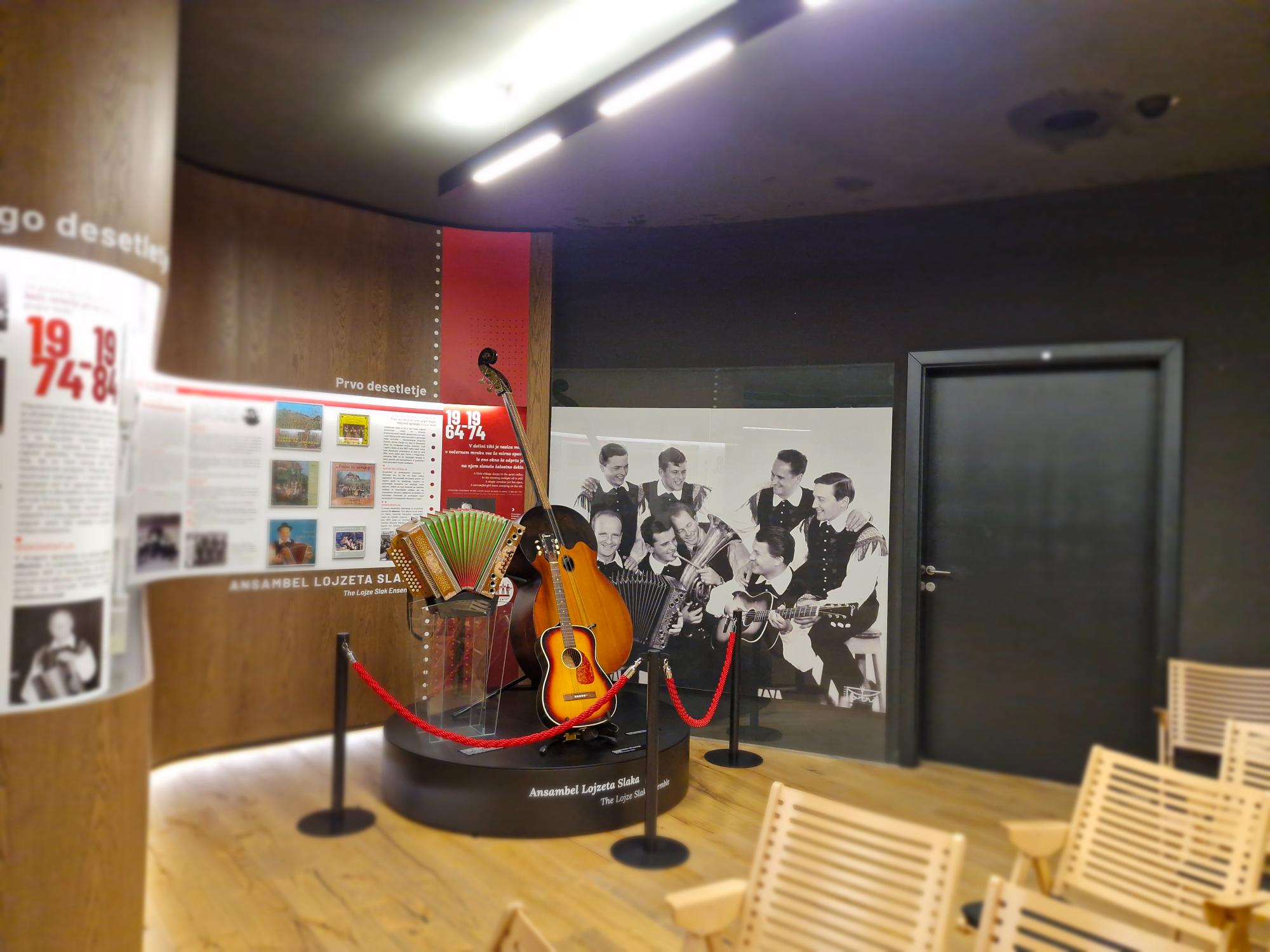
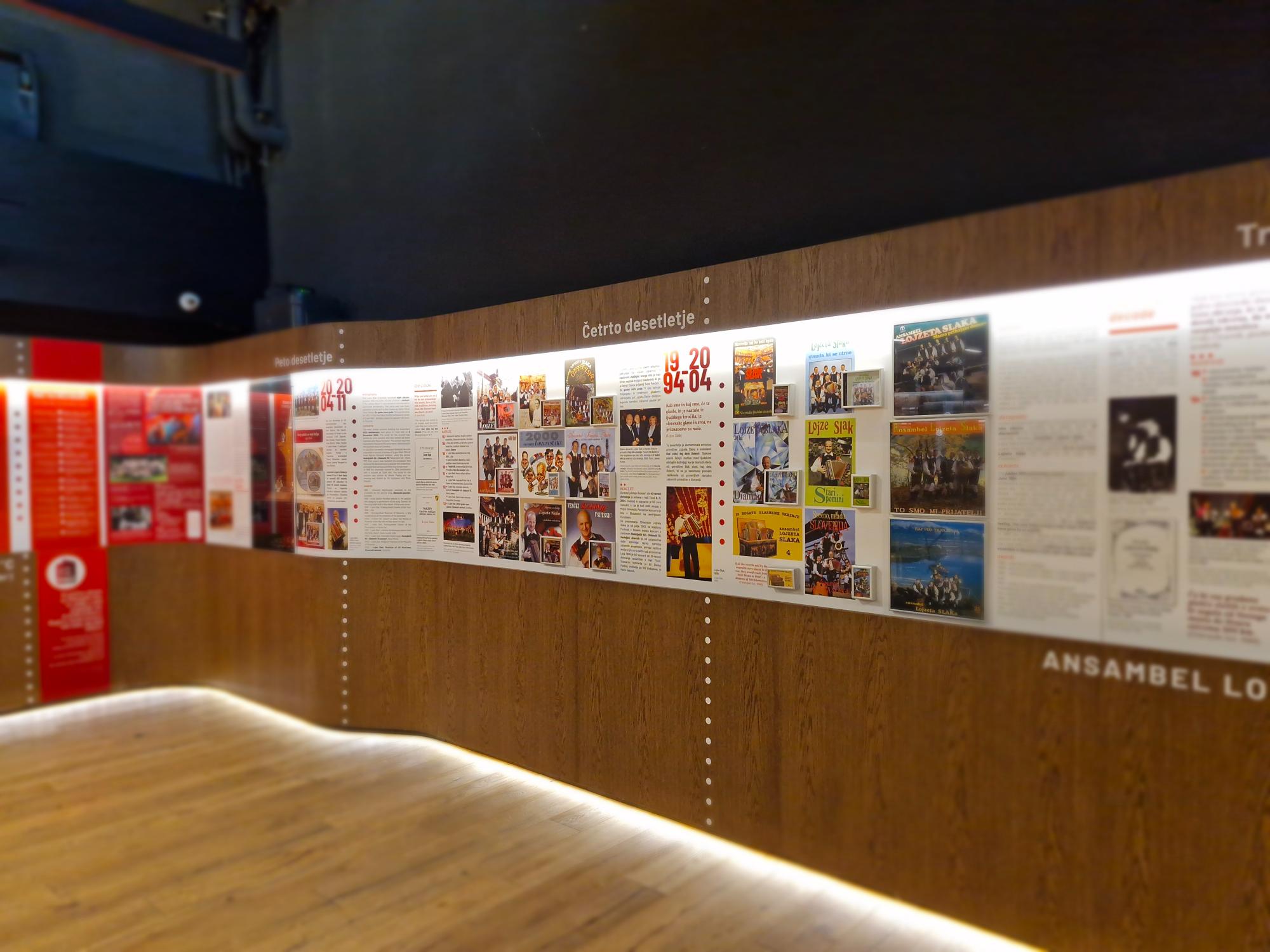
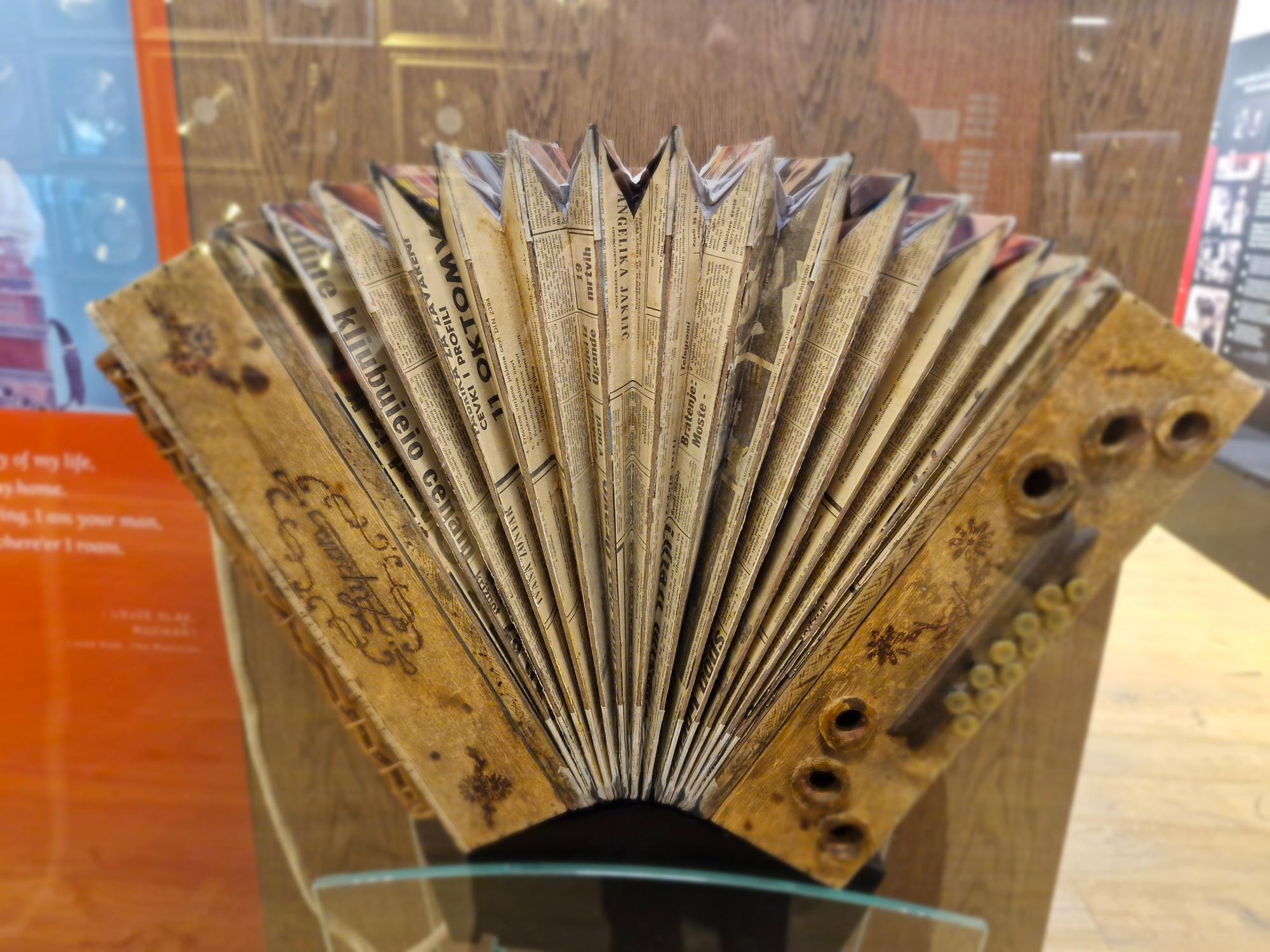
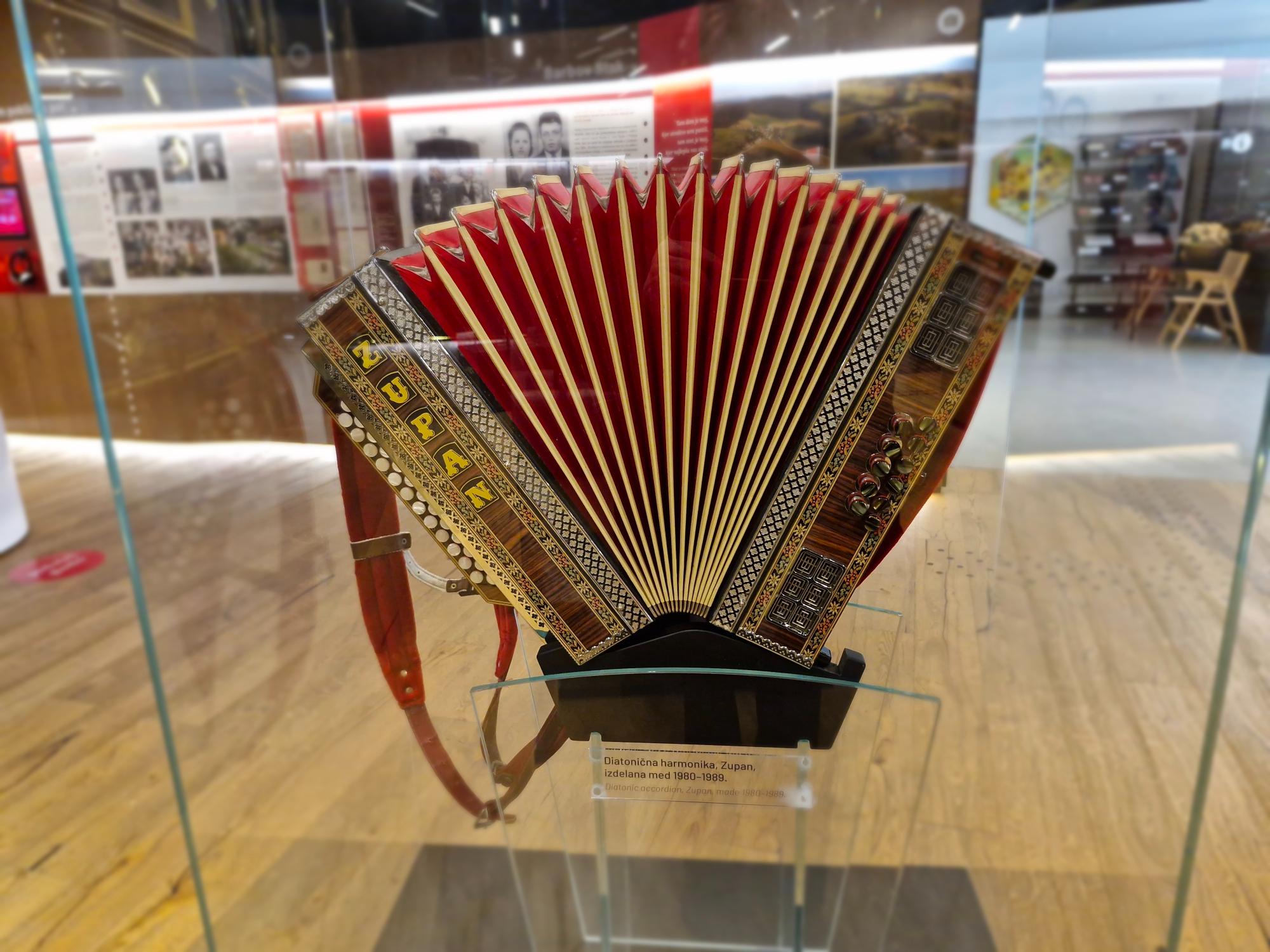
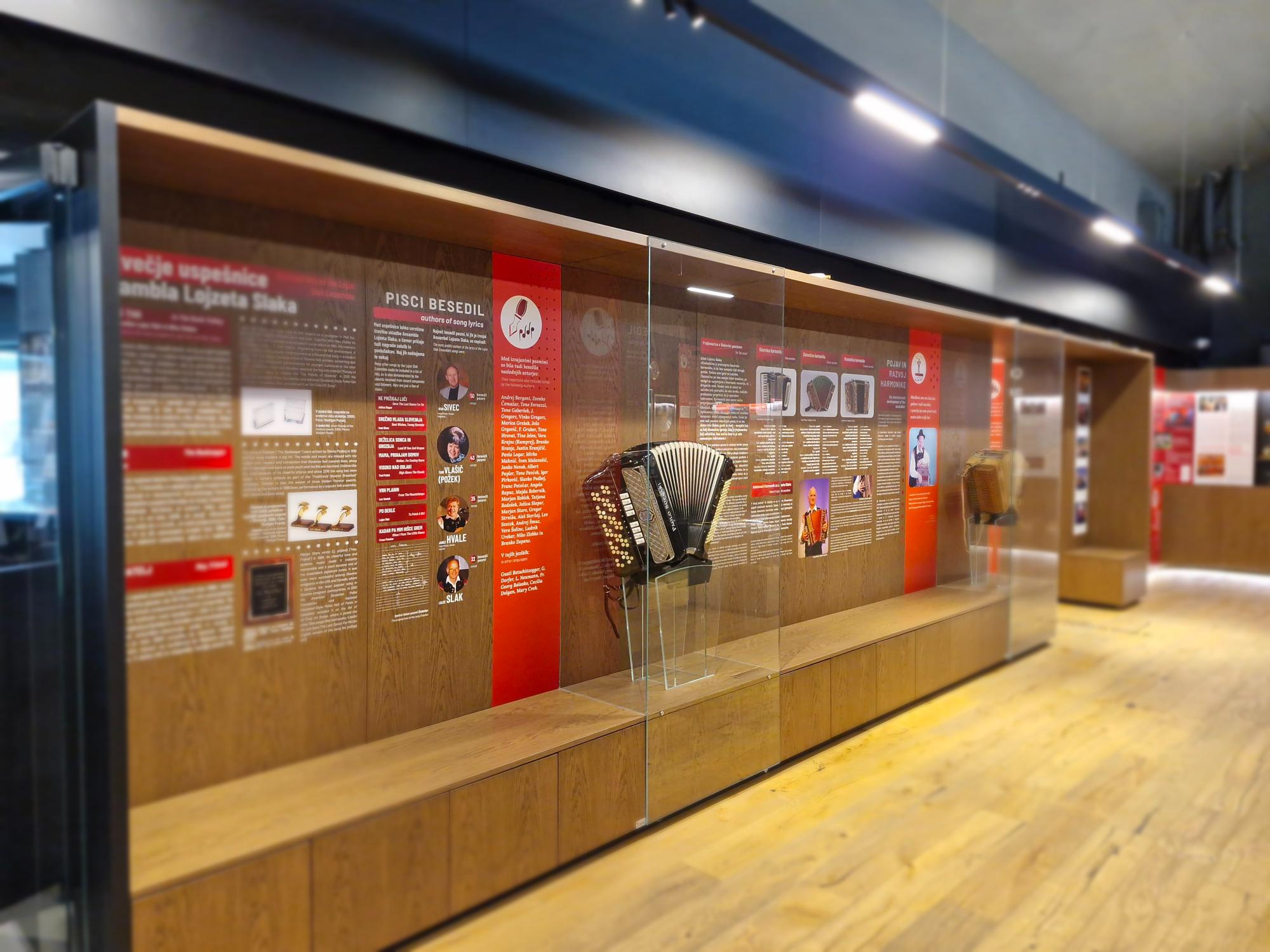
The permanent exhibition guides visitors through the life of Lojze Slak – from his beginnings in Mirna Peč to the peak of his musical career. The exhibition combines written and visual material, personal items, music, and video recordings. It presents his journey from childhood, the influence of the Dolenjska landscape and folk music on his creative output, his mastery of the diatonic accordion, and his role as leader and composer of the Ansambel Lojzeta Slaka. Among the instruments on display are accordions featuring the distinctive “Slak button”.
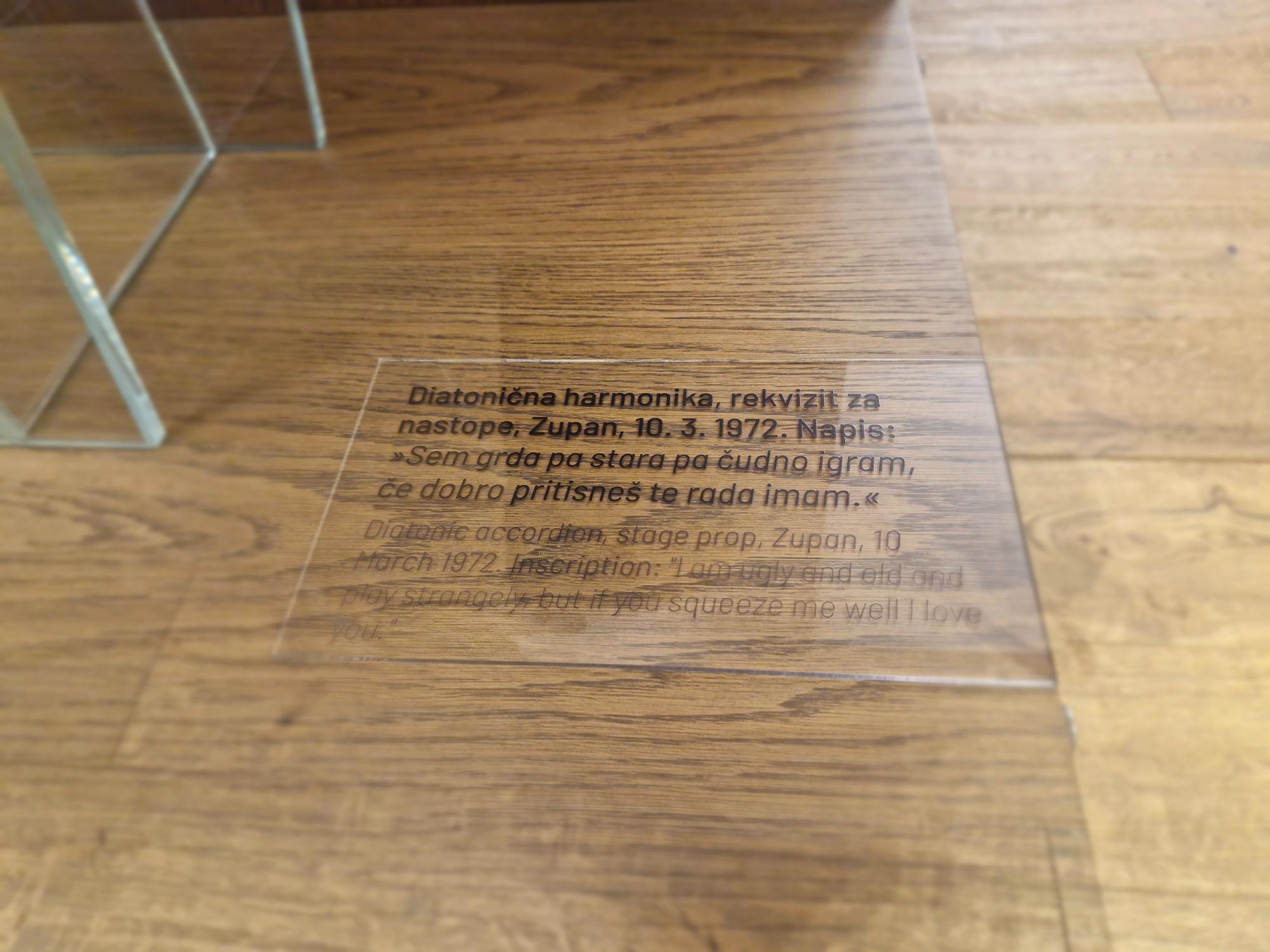
A special highlight of the exhibition is a reconstruction of a concert stage where visitors can try playing the diatonic accordion themselves. The so-called Accordion Show allows visitors, with musical and video accompaniment by Ansambel Lojzeta Slaka, to record their own performance and receive it in digital form. As part of guided tours, visitors can also see the inside of an accordion and learn how individual reeds function.
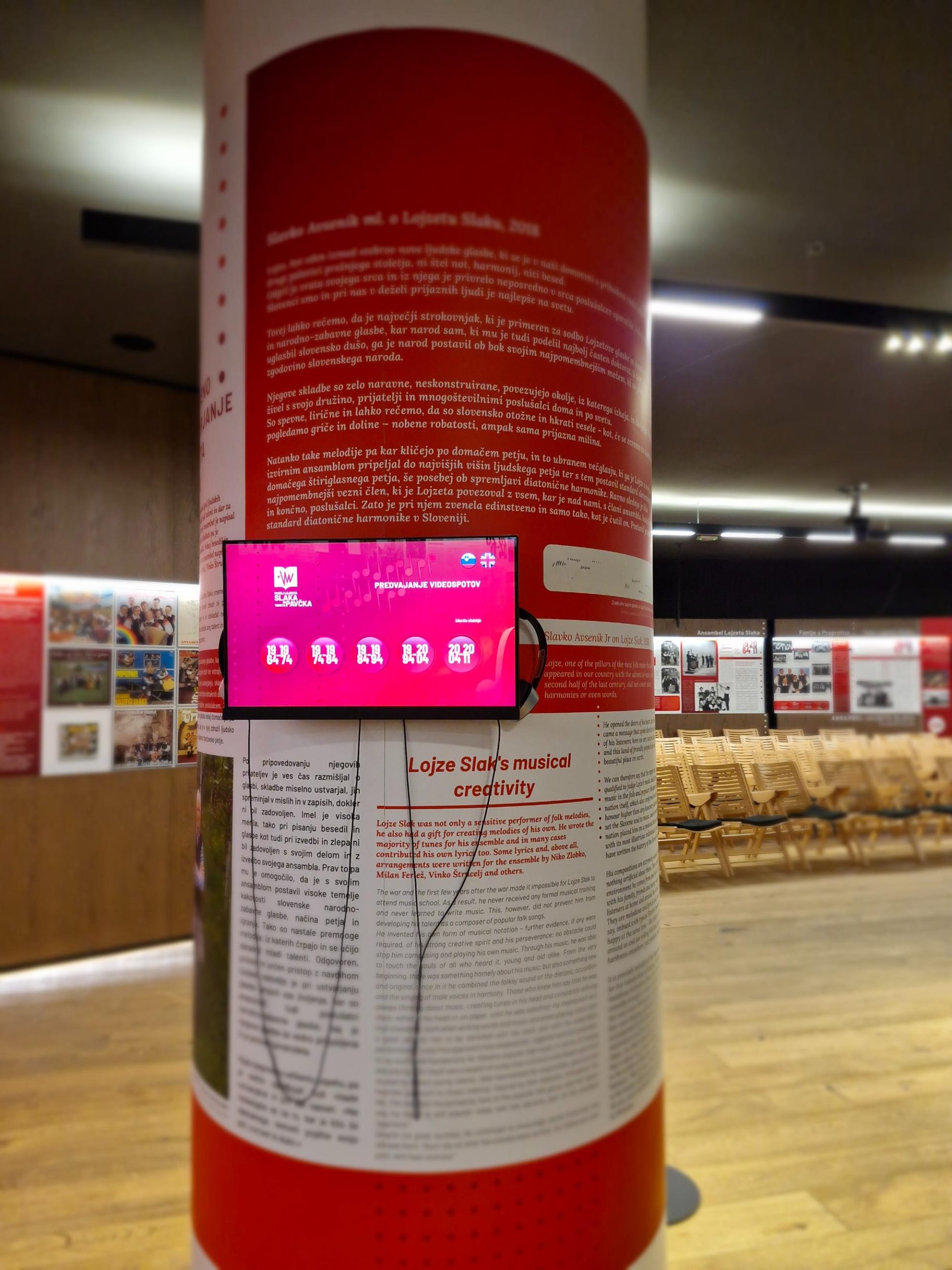
The media library provides access to extensive material related to Slak’s legacy, including his songbook, newspaper articles, archival recordings, and research material. At audio-video stations, visitors can listen to his greatest hits and watch recordings of performances.
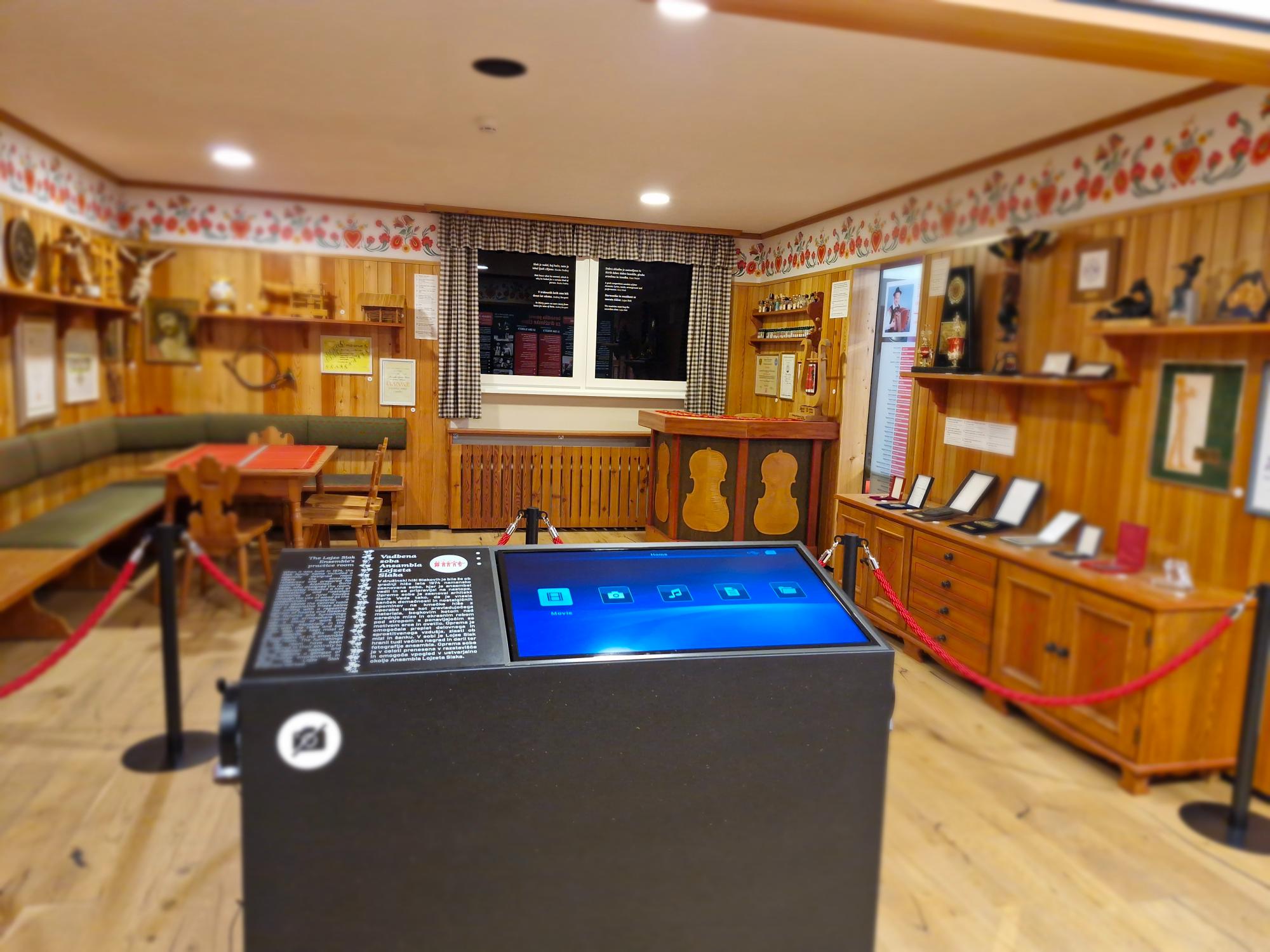
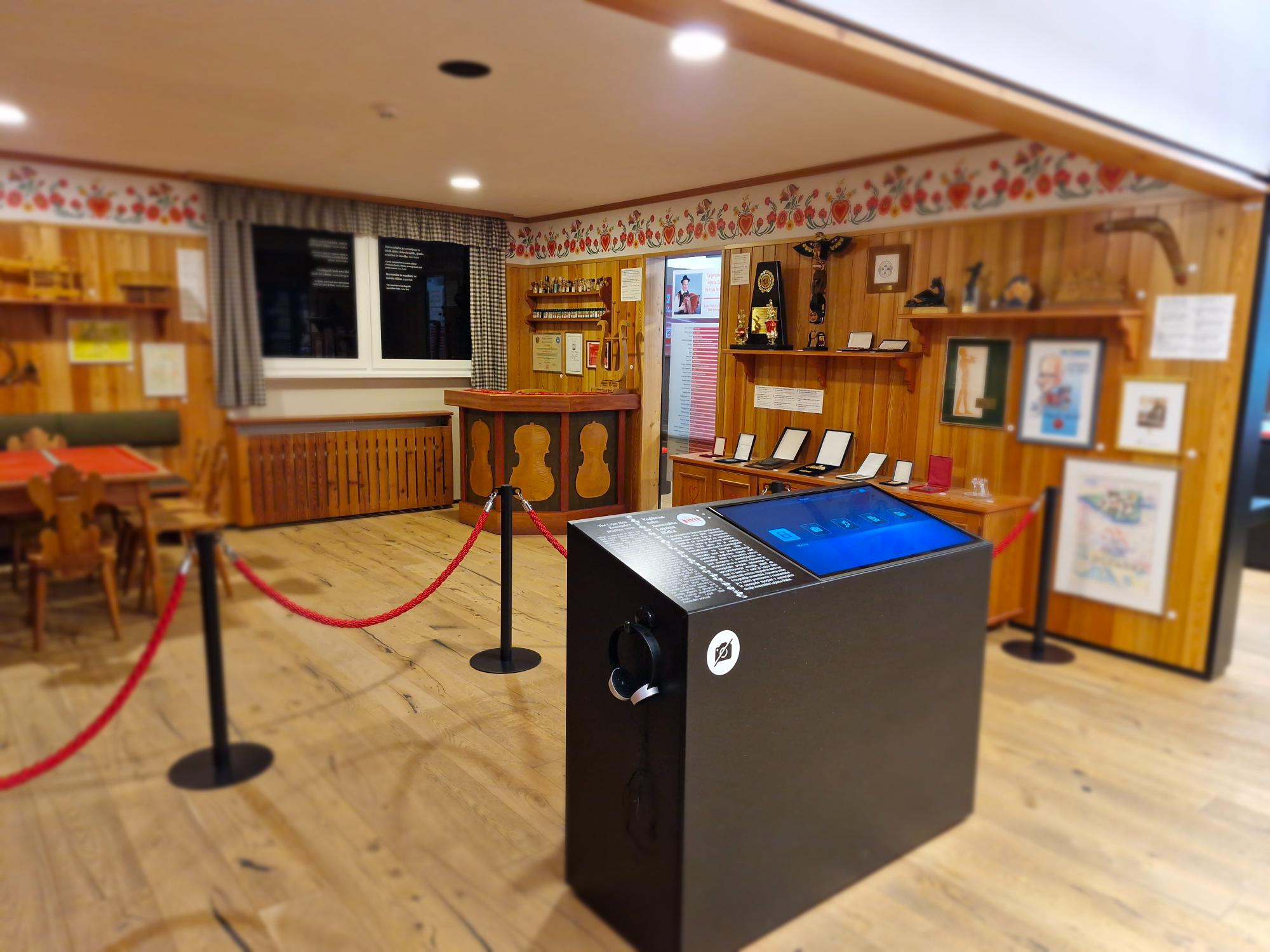
Also on display is a reconstruction of the rehearsal room from Slak’s family home in Gunclje, which, with original furniture and equipment, offers insight into the environment in which Slak’s music was created.
The majority of visitors are older adults, associations, and organised groups, but an increasing number of families and school groups also visit the museum. Guests come from all over Slovenia and abroad, including visitors from Europe, the United States, and Mexico. A distinctive feature of the museum is its strong cooperation with the local community. Local associations are actively involved in its activities, contributing to a lively programme through presentations and events. The museum thus functions as a cultural centre of Mirna Peč, preserving the memory of two outstanding creators – the musician Lojze Slak and the poet Tone Pavček.
Ansambel Lojzeta Slaka was formed in 1964 through the merger of the Trio Lojzeta Slaka and the vocal quintet Fantje s Praprotna. The ensemble was active for 47 years.
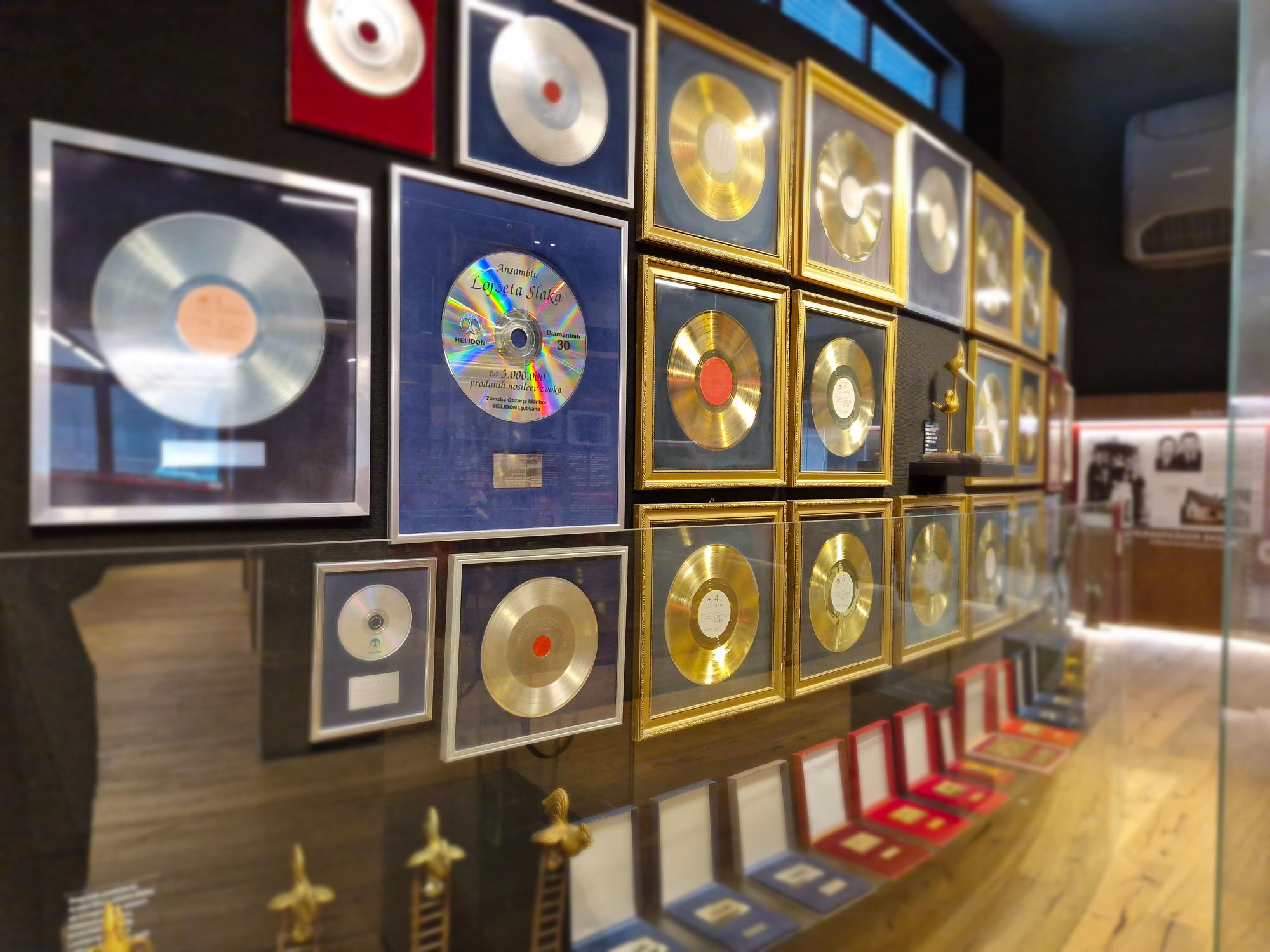
Their shared journey took them to performances throughout Slovenia and frequently to Slovenians living beyond the country’s borders in Europe, once to Australia, and five times to the United States. They released 58 music albums, which are on display in the exhibition alongside numerous awards received for high sales figures and their popularity among listeners at home and abroad – including in the United States, where Slak’s influence led to the emergence of “Button Box” clubs and polka masses.
Lojze Slak
Pop-folk musician Lojze Slak (1932–2011) was born in the village of Jordankal near Mirna Peč in the Slovenian Dolenjska (Lower Carniola) region. In his youth, he was initiated into the music of the diatonic button accordion, the so-called ‘freitoner’, by his accordionist uncle. At fifteen, he began to acquire experience by performing at weddings, and debuted before a wider public in 1957, taking part in a radio talent show, Pokaži, kaj znaš. In the early 1960s, his Trio Lojzeta Slaka (Lojze Slak Trio) entered a competition for new music groups, attaining their first notable success and appreciation by the local public with the composition Domači vasici (To My Native Village). The big turning point was when his instrumental trio and a vocal quintet, Fantje s Praprotna, combined to form a large ensemble, which significantly boosted their popularity and led to unprecedented heights. This type of configuration, an instrumental trio and male polyphonic singing, set the model for the emerging pop-folk ensembles, which emulated it to counterpoint the quintets of the Slavko Avsenik type.
Ansambel Lojzeta Slaka (The Lojze Slak Ensemble) gained renown as one of the most distinctive and original Slovenian ensembles, winning national and international acclaim. Besides crossing national borders, Slak also extended the boundaries of popular genres. In 2005, he arranged Nekaj sladkega (Something Sweet), a song by a Slovenian rock band, Big Foot Mama. The two groups went on to blend pop-folk and rock music in a jointly recorded track, Pomlad (Spring). Throughout a career spanning fifty years, Slak wrote over 500 compositions, creating countless evergreen hits with his ensemble, songs that gained popularity both in Slovenia and abroad. Some of his most notable compositions include Čebelar (Beekeeper), V dolini tihi (In a Silent Valley), Čez Gorjance (Over the Gorjanci Mountain Range), Po dekle (Courting a Girl), Mama (Mother), etc.
Unlike Slavko Avsenik, who played the piano-accordion, Slak fostered interest in and appreciation for the diatonic accordion, which gained popularity as an important token of remembrance and musical instrument through the accordionist’s influence, both among Slovenian immigrants in America and Canada and the local population there. In innovating his instrument, adding two extra ‘Slak’ buttons – a fourth bass button and a sixth button on the right-hand, melody-side keyboard, Slak left a significant personal stamp on the diatonic accordion.
Maia Juvanc