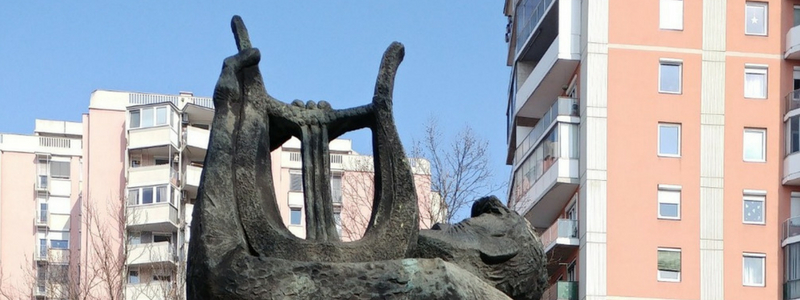
The Orpheus Monument, located off Celovška Street in front of Kino Šiška cinema, was made by sculptor Stojan Batič. The statue was erected in 1969.
The Orpheus Monument
Glasbeni vodič – MOMUS ljubitelja glasbe popelje po poteh snovne glasbene dediščine Slovenije. Interaktivna zasnova spletne publikacije s slikovnim gradivom in podrobnimi opisi omogoča neposreden stik s spomeniki, spominskimi ploščami, spominskimi parki in muzejskimi glasbenimi zbirkami.
MOMUS želi na enostaven in dostopen način vsakomur približati slovensko glasbeno kulturo ter jo postaviti na vidnejše mesto v zavesti domače in mednarodne javnosti.
Vabljeni k raziskovanju!
The Orpheus Monument, located off Celovška Street in front of Kino Šiška cinema, was made by sculptor Stojan Batič. The statue was erected in 1969.
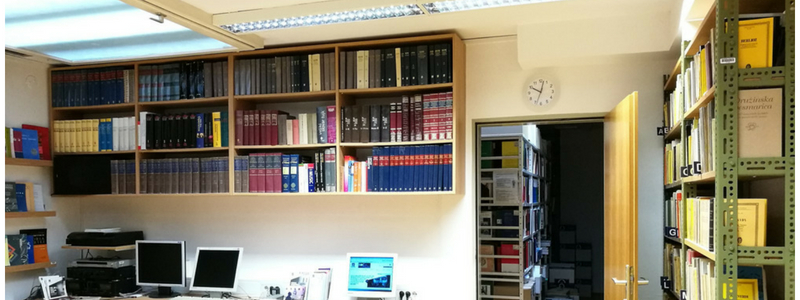
The Library of the Department of Musicology is the central Slovenian specialist library of musicology. Formed in 1961 concurrently with the establishment of the Department of Musicology, it opened a year later, in the Faculty of Arts’ first academic year. Today, it is organisationally linked with the University of Ljubljana Central Humanities Library, which incorporates
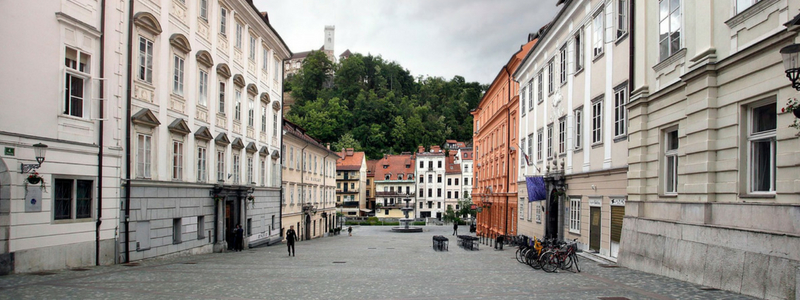
The Institute of Musicology is one of the eighteen research institutes of the Research Centre of the Slovenian Academy of Sciences and Arts. Founded in 1980, the Institute is the only independent research group specialising in musicology in Slovenia, primarily dedicated to studying early musical heritage in the geographical area of the present-day Republic of
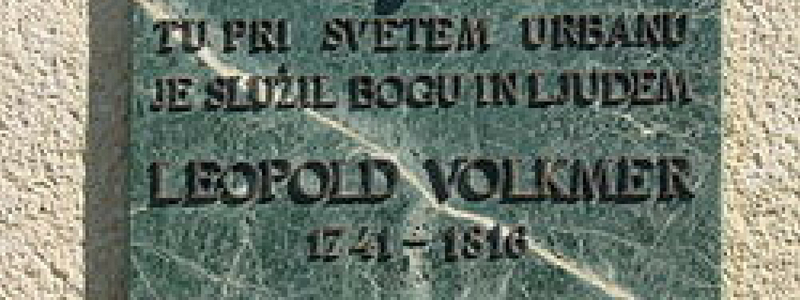
The memorial plaque was unveiled in 1996 during a symposium on Leopold Volkmer in Destrnik. It is attached to the rectory wall, and bears the inscription: “Here, in the Parish of Saint Urban, Leopold Volkmer (1741–1816) served God and the people. A national awakener, poet, composer and teacher. University of Maribor, 12 November 1996.” Leopold
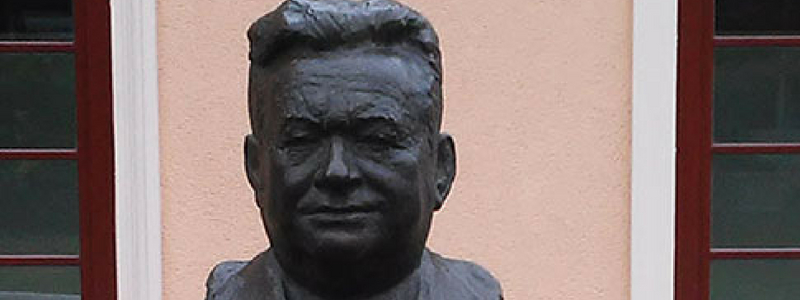
On 24 September 2015, marking the 95th anniversary of the birth and the 20th anniversary of the death of Ladko Korošec, the Municipality of Zagorje published a book, Ladko Korošec – Življenje umetnika (Ladko Korošec – The Life of an Artist), on the initiative of the Ladko Korošec Foundation. Additionally, his statue was erected on
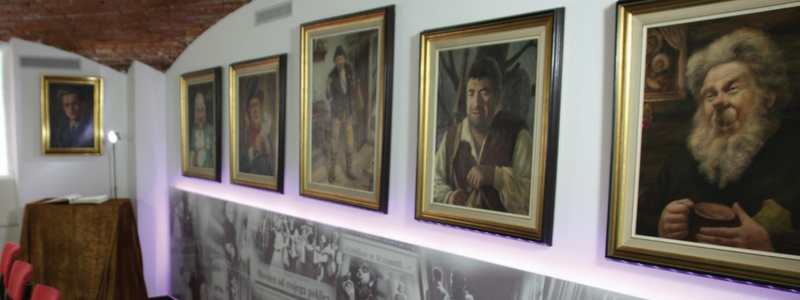
V sobi Weinbergerjeve hiše, kjer je Ladko Korošec med vračanjem v Zagorje prijateljem predvajal svoje posnetke, so na njegov rojstni dan, 3. avgusta, leta 2008 odprli spominsko sobo. Oblikovana je kot multimedijski prostor: na ekranu se vrti dokumentarni film o velikem pevcu, na ogled je nekaj njegovih osebnih predmetov ter slikovno in filmsko gradivo z
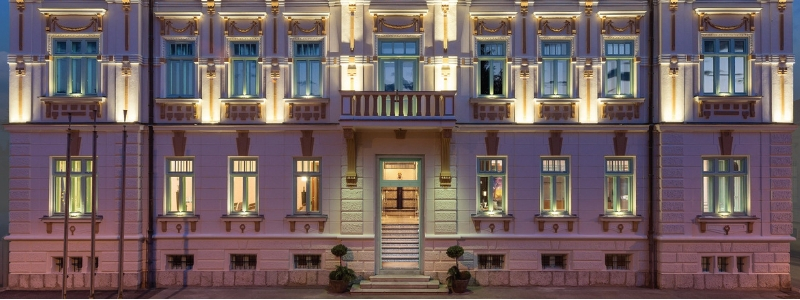
The history of the building – which has housed a public institute, the Franc Bernik Cultural Centre Domžale, and the Domžale Music School since its restoration in 1998 – dates back more than 100 years. Today, the Cultural Centre bears the name of a Domžale-based priest, writer, composer and local chronicler, Franc Bernik (1870–1948). Originally
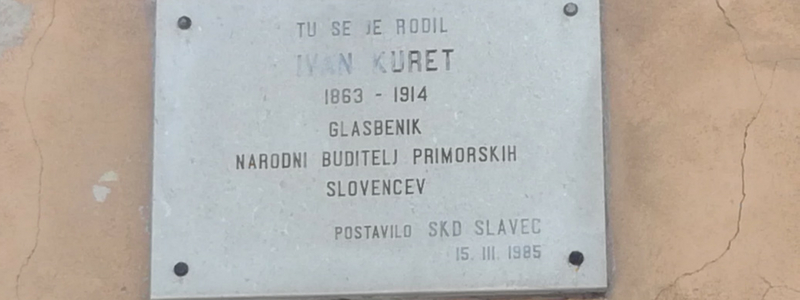
In 1985, on the initiative of the Choral and Reading Society SKD Slavec, a memorial plaque was attached to the façade of Ivan Kuret’s birthplace. The inscription reads: “Ivan Kuret, musician, national awakener of the Slovenian Littoral, was born here, 1863–1914.” Ivan Kuret Ivan Kuret (1863–1914) was a teacher, choirmaster, composer and promulgator of nationalism
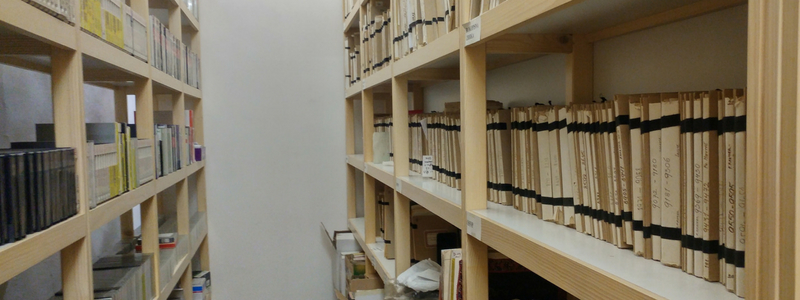
The Institute of Ethnomusicology, the oldest institute of the Scientific Research Centre of the Slovenian Academy of Sciences and Arts, was established on 15 October 1934. The first director of the Institute, known as the Folklore Institute before World War II, was France Marolt. He steered the Institute’s activity towards collecting, researching and publishing materials
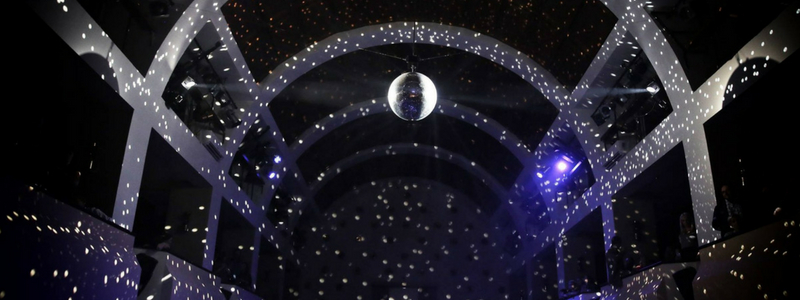
The Festival Hall has been the synonym for Ljubljana’s social life for decades. Having provided the venue for the emerging and burgeoning Slovenian popular dance music and jazz scene in the early nineteen-sixties, the Hall also occupies a special place in the history of Slovenian music. Then still bearing its former name, Soča, the Festival